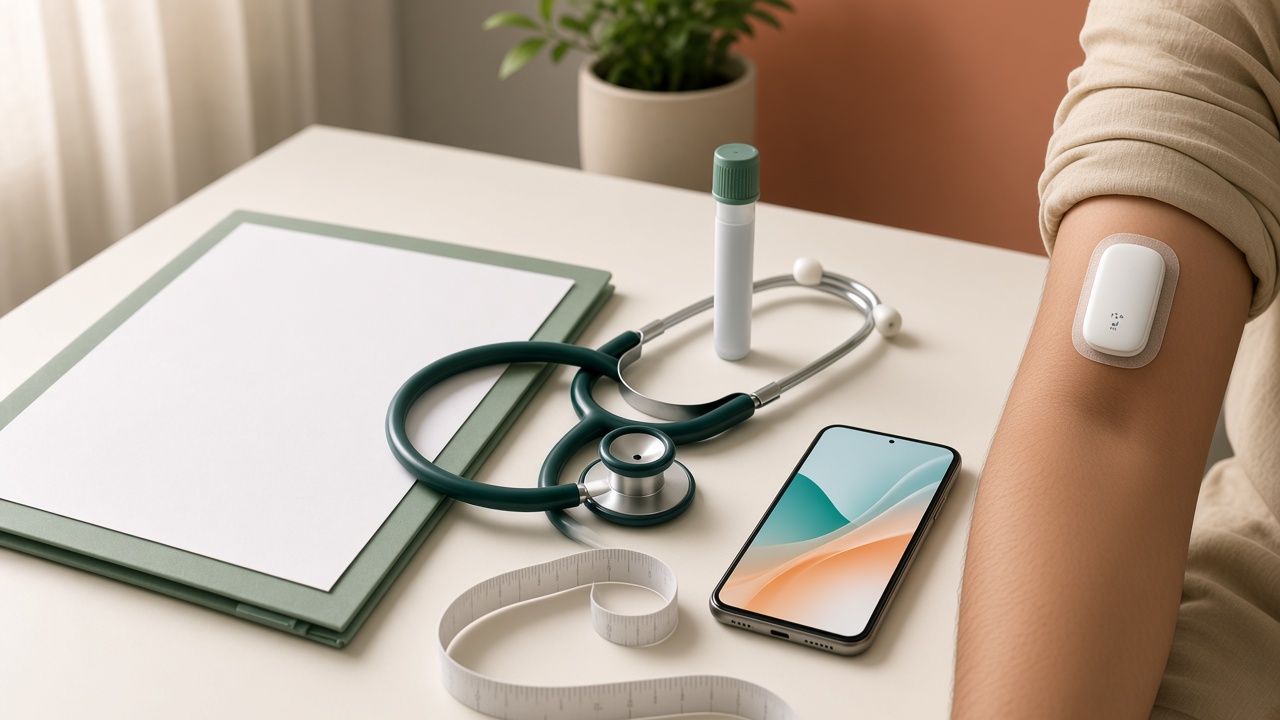
Continuous glucose monitors are often sold as a lifestyle you must wear forever. For many motivated adults with type 2 diabetes or prediabetes, a quieter rhythm works better: wear a CGM for about two weeks, once every three months — or at least every six months.
Fourteen days is long enough to see patterns. Which breakfast spikes? Which dinner is quiet? What does a late meeting snack do at midnight? How does a walk after lunch change the curve? The person learns what to eat and when to eat in their own kitchen — then lives those lessons until the next short course.
Why the 14-day average matters
Modern CGM reports include mean glucose and often a glucose management indicator (GMI) — an estimate of what HbA1c would look like from that CGM average. The Diabetes Care paper that introduced GMI formalised this language. ADA guidance notes that a 14-day CGM assessment of time-in-range and GMI can serve as a surrogate for A1c in clinical management when enough data are active (commonly aiming for at least ~70% of the fortnight).
Think of it this way: HbA1c is the term report. A fortnight of CGM is the parent-teacher meeting where you see which subjects failed. If the two-week average is calm, the next lab A1c usually follows. If the fortnight is chaotic, change meals now — do not wait three months to be surprised.
What the quarterly classroom should teach
- Meal identity. The same “healthy” breakfast may spike one person and spare another. CGM ends abstract arguments.
- Timing. Late dinners and dawn rises — the cortisol story in Part 1 — become visible as overnight slopes, not folklore.
- Diet leverage. Prove whether the plate changes in Part 2 actually flattened the curve.
- Safety. Time below range matters as much as averages — especially for older adults and anyone on insulin or hypo-risk medicines.
A learning CGM is a classroom. It is not a substitute for prescribed therapy.
How to run the habit
1. Pick a cadence: every 3 months, or every 6 if stable.
Unstable control, new medicines, or a major diet overhaul favour a quarterly fortnight. Stable numbers may stretch to twice a year — still with eyes open.
2. Wear ~14 days with honest meal notes.
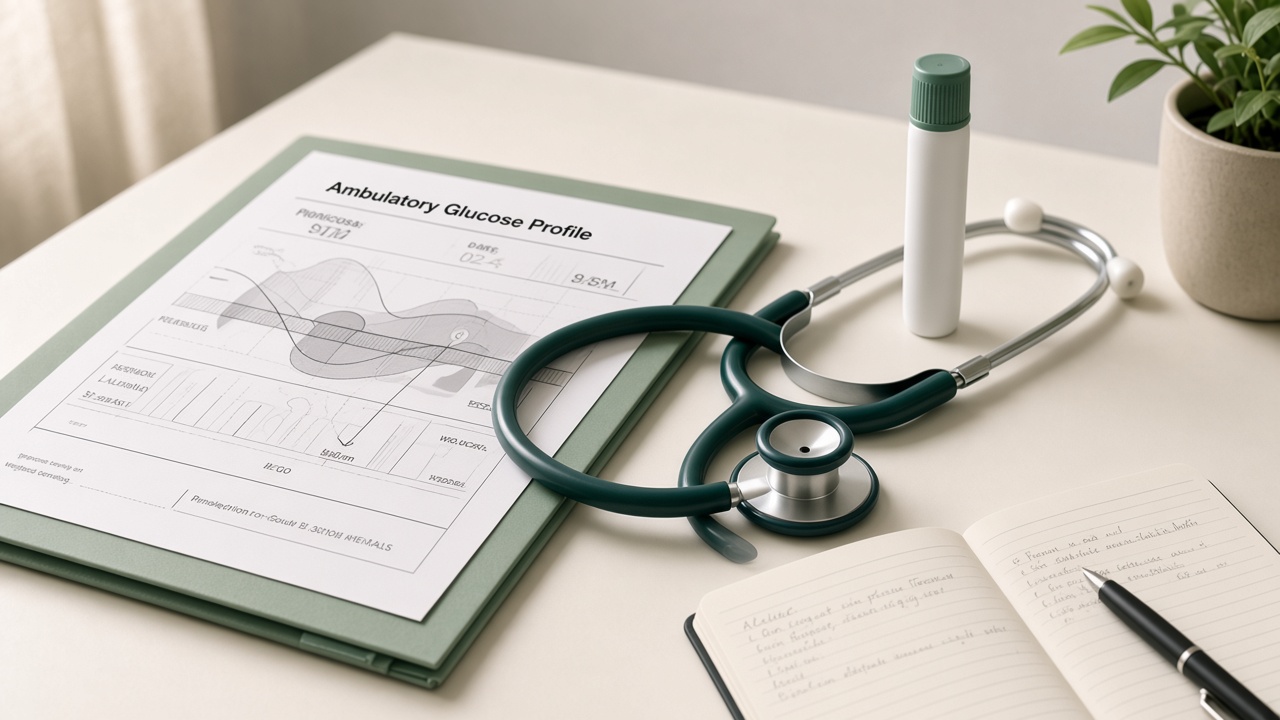
Without notes, spikes become mysteries. With notes, the Ambulatory Glucose Profile becomes a coaching document.
3. Review with your physician, not only the app.
Pattern beats panic at a single spike. Share GMI, time-in-range, and the meals you already plan to change.
4. Live the lessons until the next sensor.
The point of intermittent CGM is behaviour change between wears — not a drawer full of unused sensors.
Who needs continuous wear instead
People on intensive insulin regimens, those with hypoglycaemia unawareness, pregnancy-related diabetes care under specialist protocols, and anyone your clinician flags for safety may need ongoing CGM — not a quarterly classroom. This essay is for the large group of adults who need pattern literacy more than a permanent gadget identity.
The clinical takeaway
Use CGM to audit the plate and illuminate the dawn. Pair it with the cortisol clarity of Part 1 and the diet discipline of Part 2. Return to the series overview for diagnostic ranges and age-wise HbA1c targets. Then put the next fortnight on the calendar before the next lab surprise.
Wear it long enough to learn. Take it off long enough to live what you learned.

This article is general educational content by Dr. Amitabh Parti. It is not a substitute for individual medical advice. Please consult a qualified physician for guidance specific to your condition.
Respond to this essay
Thoughts, questions, or a letter of your own? Dr. Parti reads correspondence at amitabhparti@gmail.com. Please do not send clinical questions or personal medical details — this is not a consultation channel.