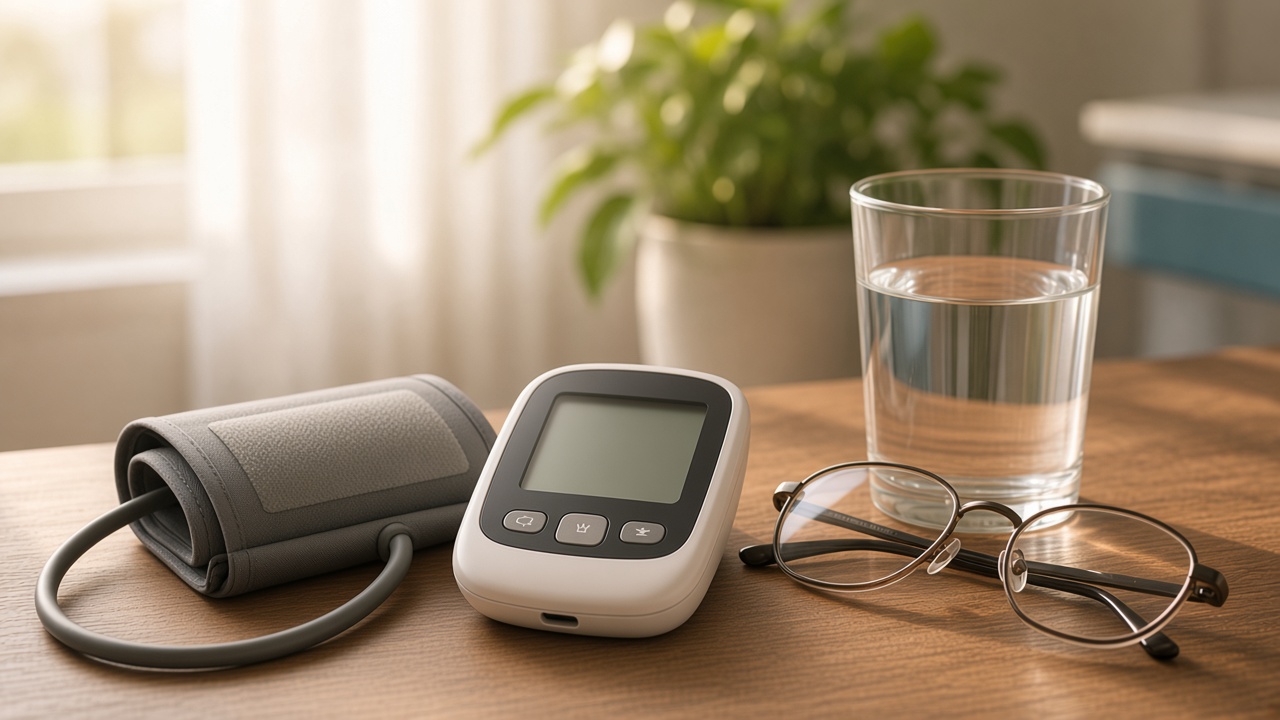
Ask what Indians google about health and sugar dominates the list. Right behind it sit two quieter killers: blood pressure and cholesterol. The questions are practical — what is high BP, how do I lower it, how do I bring cholesterol down — and they deserve answers that are more than “eat less salt” posters.
As Senior Director and Unit Head of Internal Medicine at Fortis Memorial Research Institute, Gurgaon, I see the mismatch weekly: a reassuring fasting sugar beside a blood pressure that has been “a little high for years,” and an LDL that nobody has named out loud. Sugar gets the anxiety. Arteries keep the invoice.
What “high blood pressure” actually means
In contemporary cardiometabolic care — including the ADA Standards of Care 2026 on cardiovascular risk — hypertension is generally a systolic reading ≥130 mmHg or a diastolic ≥80 mmHg. Elevated blood pressure starts even earlier (systolic 120–129 with diastolic still under 80). Clinic numbers need confirmation: proper cuff size, seated rest, and often home or ambulatory readings so white-coat spikes do not write the whole prescription.
- One dramatic reading is a weather report; a pattern is climate
- Home monitors are useful when validated and used with the arm supported at heart level
- Headache is an unreliable early warning — hypertension is usually silent
For many people with diabetes, if it can be reached safely, the on-treatment goal is <130/80 mmHg. In those with high cardiovascular or kidney risk, guidelines increasingly encourage aiming systolic closer to <120 mmHg when that can be done without harm. Older or frail adults need individualisation — the same philosophy we used for age-wise HbA1c in the sugar series.
Cholesterol: the number on the report is not the whole risk
Patients fixate on “total cholesterol.” Clinicians care more about LDL-C (the particle burden that drives plaque), triglycerides, and the company those lipids keep — diabetes, smoking, family history, prior heart disease. For adults 40–75 with diabetes, modern guidance typically pushes LDL well below casual “normal” folklore — often toward <70 mg/dL for primary prevention with risk factors, and even lower (commonly <55 mg/dL) when atherosclerotic disease is already present. Lifestyle is mandatory; for many, a statin is not optional vanity — it is risk reduction.
You do not feel LDL the way you feel a fever. That is why the report has to speak louder than comfort.
How to lower BP and cholesterol — lifestyle first, medicines when earned
1. Fix the salt and the hidden salt.
Table salt is obvious. Pickle, papad, namkeen, restaurant gravy, and packaged snacks are the quiet majority. Reducing sodium helps blood pressure; it does not require a joyless kitchen — it requires reading labels and reclaiming home cooking.
2. Rebuild the plate the way we rebuild sugar control.
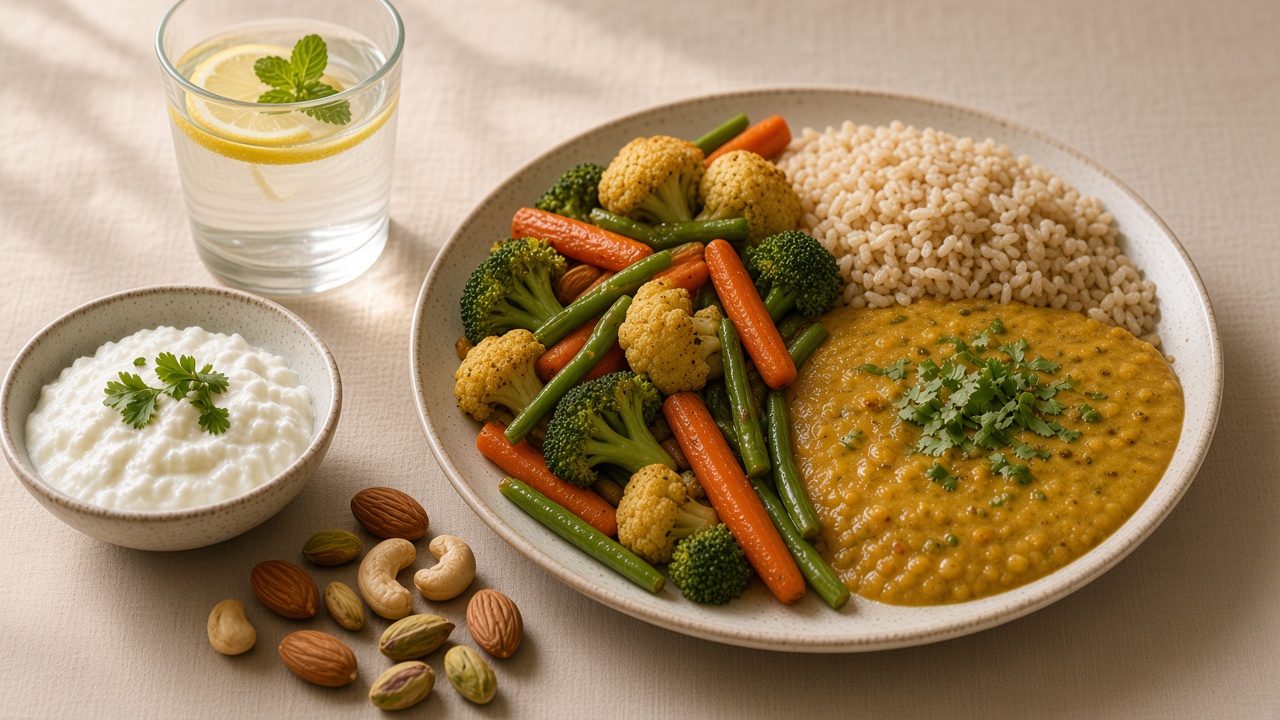
The same Indian-plate logic from diet as make-or-break applies: more vegetables and dal, adequate protein, fewer refined carbs and deep-fried evenings, nuts in handfuls not tins. Saturated fat from ghee-and-fried stacks matters for LDL; fibre and weight loss help both pressure and lipids. There is no universal miracle oil — there is pattern.
3. Move daily; sleep like it is medicine.
Brisk walking most days lowers blood pressure and supports lipids. Resistance work twice a week protects muscle while weight changes. Sleep debt and untreated snoring push both numbers the wrong way — treat the night if the day looks unexplained.
4. Know when tablets are not a moral failure.
If lifestyle is honest and numbers stay high — or if diabetes, kidney disease, or prior ASCVD already raise stakes — antihypertensives and statins are tools, not admissions of defeat. Do not stop them because a week of salads felt virtuous. Do not start them from a pharmacy counter without a plan for potassium, creatinine, muscle symptoms, and follow-up labs.
A practical checklist for this month
- Measure BP correctly at home for a week; bring the log, not a single scare
- Get a fasting lipid panel and know your LDL — not only “total”
- Cut the daily namkeen and restaurant salt before you buy a new supplement
- Walk after the largest meal; protect seven-ish hours of sleep
- Ask your physician whether your personal BP and LDL goals should be tighter because of diabetes or prior heart risk
Further reading
- ADA Standards of Care 2026 — Cardiovascular Disease and Risk Management
- ADA — Diabetes diagnosis & tests (why sugar and heart risk travel together)
- Know Your Sugar Pattern — series overview
Sugar gets the search. Blood pressure and cholesterol write the prognosis. Measure both.

This article is general educational content by Dr. Amitabh Parti. It is not a substitute for individual medical advice. Please consult a qualified physician for guidance specific to your condition.
Respond to this essay
Thoughts, questions, or a letter of your own? Dr. Parti reads correspondence at amitabhparti@gmail.com. Please do not send clinical questions or personal medical details — this is not a consultation channel.