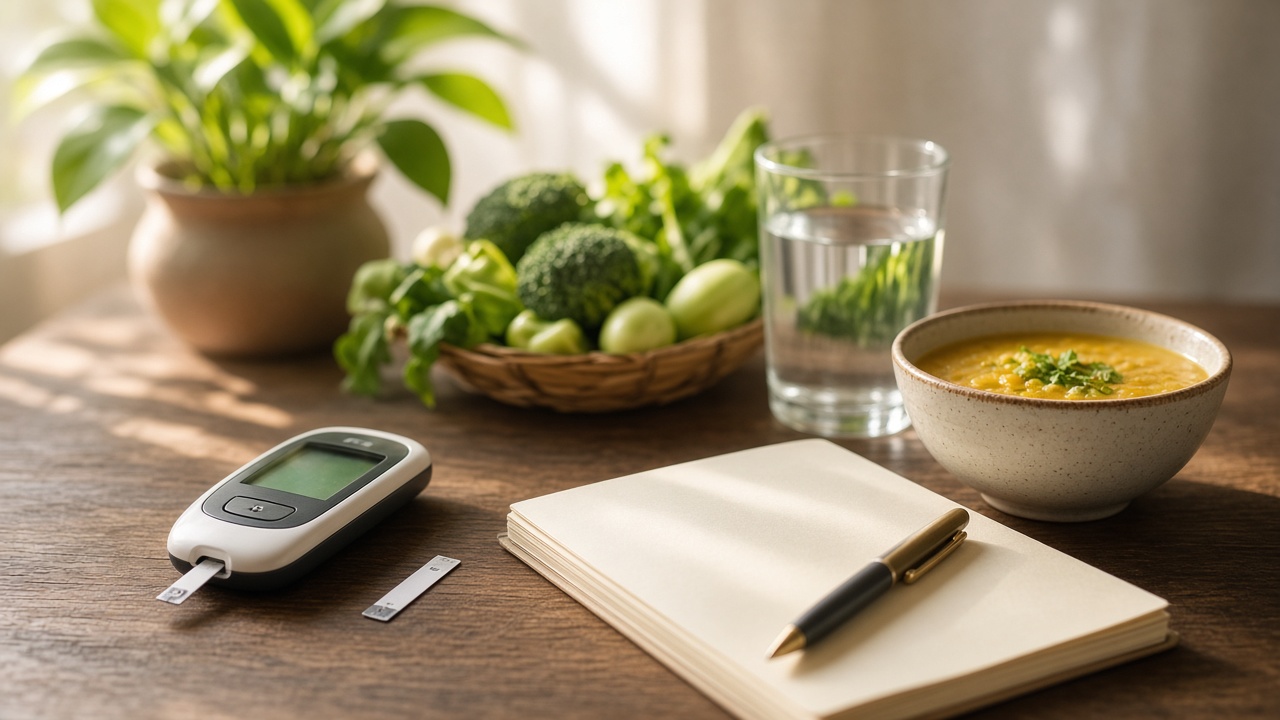
World Diabetes Day 2026 carries a simple message: early action on diabetes. For India, that message is not a slogan. It is a clinical urgency.
Nearly 1 in 2 Indians living with diabetes does not know it. They are diagnosed late — often when the eyes, kidneys, nerves or heart are already paying the price. By the time thirst, weight loss or blurred vision force a clinic visit, years of silent hyperglycaemia may already have done quiet damage. That is why “I feel fine” is one of the least reliable reassurances in metabolic medicine.
Diabetes in India is not merely more common. It behaves differently. Understanding those differences is the first step toward acting early enough to matter.
Three things make the Indian picture worse
Younger onset. Indians tend to develop diabetes roughly a decade earlier than many Western populations, and often at lower BMI and smaller waist sizes. The person who looks “not overweight” on a weighing scale can still carry high-risk visceral fat and impaired insulin sensitivity. “I’m not overweight” is therefore not reassurance — it is sometimes a reason to look harder.
Low muscle, high visceral fat. The Asian “thin-fat” phenotype is familiar in Indian consulting rooms: modest BMI, soft midsection, and reduced skeletal muscle. Muscle is the body’s largest glucose sink. When muscle mass falls — through ageing, inactivity, low protein intake or repeated crash dieting — insulin resistance rises, beta cells work harder, and failure arrives sooner. The same biology helps explain earlier target-organ damage in people who never thought of themselves as high risk.
A carbohydrate-heavy, sedentary lifestyle. Refined carbs, low protein, long sitting hours and steadily eroding muscle health form a predictable path. White rice and maida at most meals, sugary drinks as habit, evening snacks after a day of desk work: none of this is exotic. It is ordinary. And ordinary, repeated daily, becomes disease.
These three forces together mean India cannot afford a Western timeline of “screen at fifty and wait for symptoms.” Early action has to start earlier, and it has to be broader than a single fasting sugar.

What to do
1. Test early. Don’t wait for symptoms.
Symptoms are a late language. Screening is how we hear the disease while it is still whispering.
- Start screening at 30 — or earlier with a family history of diabetes, a waist above 90 cm in men or 80 cm in women, PCOS, hypertension, gestational diabetes history, or unexplained fatigue and weight change
- Use HbA1c plus fasting glucose; add a 2-hour post-glucose value when the picture is borderline or the clinical suspicion is high
- At the same visit, consider lipids, urine albumin-creatinine ratio, eGFR and a liver profile — diabetes rarely travels alone
- Think beyond BMI. Body composition, waist circumference and, where available, a sense of muscle reserve tell a truer story than weight alone
A normal report at forty does not grant lifelong immunity. Risk rises with age, weight regain, reduced activity and family history. Testing is not a one-time event; it is a rhythm.
2. Consult early.
Prediabetes is a treatable window, not a “borderline” report to file and forget. In that window, lifestyle change and, when appropriate, early individualised therapy can preserve beta-cell function and delay — sometimes prevent — progression to frank diabetes and its complications.
- Do not wait for a dramatic HbA1c before seeking advice. Numbers that sit just above normal deserve a plan, not polite neglect
- Early therapy, chosen for the person — their age, weight, kidney function, heart risk and ability to sustain habits — protects more than a late rescue regimen
- Once diabetes is diagnosed, build an annual review of eyes, feet, kidneys and heart into the calendar. Complications are quieter than symptoms and far more expensive to reverse
Consultation is also where fear becomes usable information. Patients often arrive with inherited dread — a parent on dialysis, an uncle who lost a toe. Naming that fear and answering it with a concrete plan is part of early action.
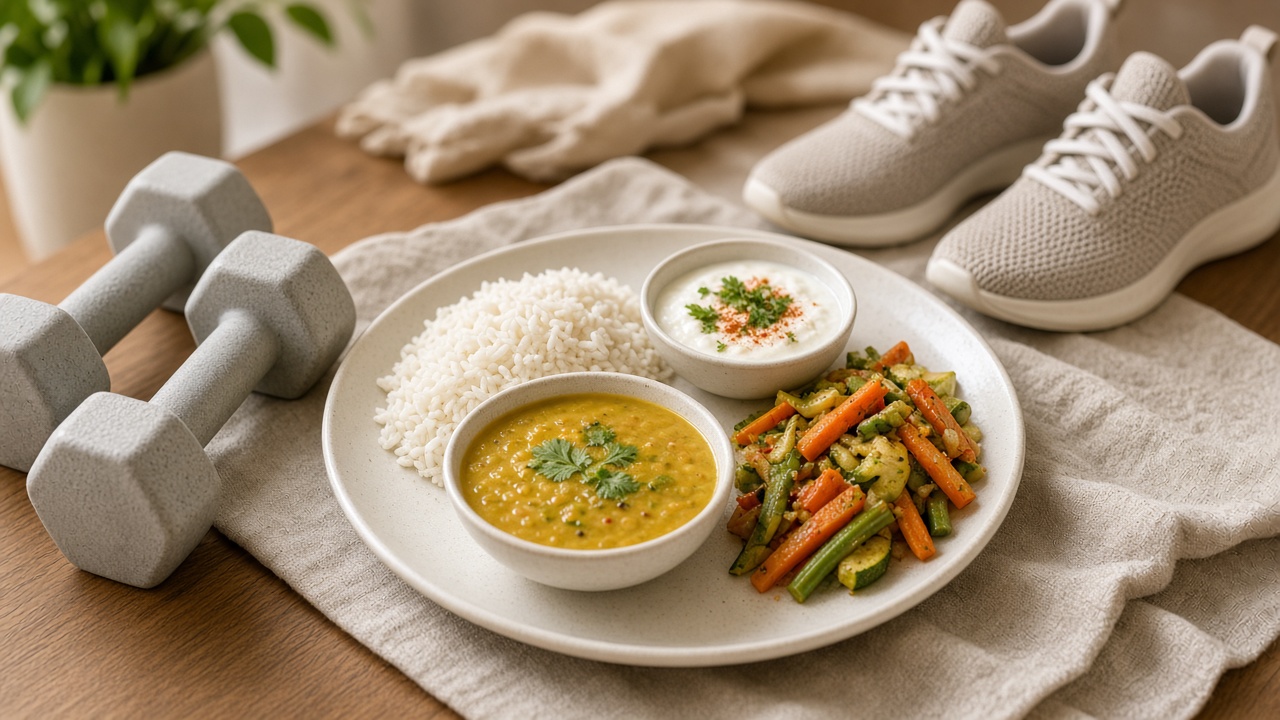
3. Fix the plate.
Food is not the only lever, but it is the lever most people touch three times a day. The Indian plate does not need to become foreign. It needs to become deliberate.
- Cut refined carbs where they dominate: large portions of white rice, maida-based breads and snacks, sugary drinks, and daily sweets
- Build every meal around adequate protein — dal, curd, paneer, eggs, fish, soy, lean meat — then add vegetables, fibre and a handful of nuts
- Keep meal timing reasonably consistent. Irregular late dinners and grazing through the evening push glucose and weight in the wrong direction
Portion discipline matters more than perfect recipes. A smaller mound of rice beside a larger share of dal and sabzi is often a more durable change than an extreme diet abandoned in three weeks. Protein is not a Western fashion; it is how we protect muscle while we improve glycaemia.
4. Build muscle, not just burn calories.
Walking helps. Resistance training changes the story. Muscle mass is metabolic infrastructure: it stores glycogen, improves insulin sensitivity and protects against frailty as people age with diabetes.
- Aim for at least 150 minutes a week of brisk activity — walking that raises the breath, cycling, swimming, or equivalent
- Add resistance training two to three days a week. Bodyweight, bands or light weights all count. It remains the most underused anti-diabetic “drug” available to almost every adult
- Break up sitting every 30 to 45 minutes. A 10-minute walk after meals measurably blunts post-meal glucose spikes — a small habit with outsized returns
People who “hate gyms” can still train: sit-to-stands from a chair, wall push-ups, stair climbs, loaded grocery bags carried with good form. The medicine is the muscle recruitment, not the membership.
Early action is ordinary courage
World Diabetes Day should not leave us with only awareness posters. It should leave households with a next step: a screening date, a plate change, a walking shoes habit, a resistance session on the calendar, an appointment booked before complications write their own agenda.
Early action is not alarmism. It is the difference between a manageable lifelong conversation and irreversible damage to eyes, kidneys, nerves and heart. For India — younger onset, thinner-looking high risk, carb-heavy days and too little muscle — waiting for symptoms is waiting too long.
This year, the useful question is practical: have you been screened, and if not, when will you start?
Know your numbers. Know your muscle. Act before the diagnosis acts on you.
Get tested this week, and ask a family member to do the same.

This article is general educational content by Dr. Amitabh Parti. It is not a substitute for individual medical advice. Please consult a qualified physician for guidance specific to your condition.
Respond to this essay
Thoughts, questions, or a letter of your own? Dr. Parti reads correspondence at amitabhparti@gmail.com. Please do not send clinical questions or personal medical details — this is not a consultation channel.